Revitalize Your Feed: 60 Dessert Retro Social Media Templates
In the crowded digital landscape, establishing a distinct visual voice is no longer optional—it is a necessity. For small businesses, content creators, and marketing professionals, the challenge lies in producing high-quality content consistently without sacrificing authenticity. This is where the 60 Dessert Retro Social Media Templates come into play. These assets are not merely a collection of graphics; they are a comprehensive design system built to bridge the gap between nostalgic charm and modern marketing needs. If you have been searching for a way to infuse your brand with personality while streamlining your workflow, this collection offers a sophisticated solution.
The Aesthetic of Nostalgia and Modernity
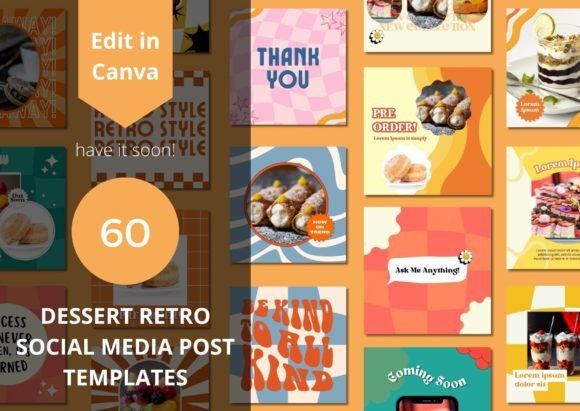
The defining characteristic of the 60 Dessert Retro Social Media Templates is their unique blend of vintage aesthetics with contemporary layout principles. "Retro" in design is a broad term, but these templates specifically target a sweet spot that balances mid-century typography sensibilities with the clean, negative-space requirements of modern web design. You will notice a deliberate use of color palettes that evoke warmth—think muted pastels, creamy off-whites, and rich, appetizing tones that trigger a sensory response associated with comfort food.
From a visual hierarchy standpoint, these templates excel. They utilize display font pairings that mimic the signage of classic bakeries and diners, creating an immediate emotional connection. However, unlike purely historical recreations, these designs incorporate modern sans serif font elements for body text. This ensures that while the "vibe" is nostalgic, the readability remains optimized for mobile screens and fast scrolling. The result is a brand identity that feels established, trustworthy, and uniquely human.
Strategic Applications for Brand Growth
Understanding where and how to deploy these templates is crucial for maximizing your return on investment. The versatility of the 60 Dessert Retro Social Media Templates extends far beyond food blogging, although they are naturally suited for culinary content.
Small Business and Product Advertising
For entrepreneurs in the food industry—bakers, coffee shop owners, or artisanal candy makers—these templates are invaluable. They allow you to showcase your products within a context that implies "homemade" quality and care. The design frames draw the eye directly to the product, utilizing the retro aesthetic to suggest that your offerings are timeless classics. However, this style also works surprisingly well for non-food businesses that want to convey a friendly, approachable brand identity. A vintage bookstore or a handmade soap shop could use these layouts to great effect, leveraging the "warmth" of the design to build community trust.
Content Creation and Influencer Marketing
For content creators and influencers, consistency is the currency of growth. The 60 Dessert Retro Social Media Templates provide a cohesive framework that ensures your grid looks curated without appearing sterile. When you use these Canva templates, you are essentially adopting a design system. This consistency signals professionalism to potential collaborators. It tells a brand partner that you understand visual hierarchy and care about how their products are presented. These templates serve as the perfect backdrop for lifestyle shots, quotes, and promotional announcements, ensuring that every post contributes to a unified narrative.
Practical Workflow and Customization
One of the most significant hurdles in social media marketing is the time cost of design. The 60 Dessert Retro Social Media Templates are engineered to solve this problem through accessibility. Being fully editable in Canva (both free and Pro versions), they democratize graphic design. You do not need to master complex software like Adobe Photoshop or Illustrator to achieve professional results.
When approaching customization, I recommend focusing on three key areas to make these templates your own:
- Typography Adjustments: While the included typeface selections are strong, you may want to swap the display font to match your specific logo. Ensure that any new font pairing maintains the balance between the decorative headers and the legible body copy.
- Color Grading: The retro palette is excellent, but aligning it with your specific brand colors is vital. Use the "Global Colors" feature in Canva to quickly swap the template’s hues for your own, maintaining the vintage feel while reinforcing your specific identity.
- Image Selection: The success of a template relies heavily on the photography used. For a retro theme, images with soft lighting, warm tones, and natural textures tend to perform best. Avoid overly sharp, high-contrast modern photography if you want to maintain the cohesive editorial design look.
Evaluating Fit and Long-Term Value
When investing in design assets, it is helpful to view them as long-term tools rather than one-off purchases. The 60 Dessert Retro Social Media Templates offer significant value because they cover a wide range of content needs—from sales announcements to engaging questions—allowing you to plan a month's worth of content in a single afternoon.
Before integrating them fully, I suggest a "test run." Select three templates that best represent your current content pillars. Edit them, post them, and monitor the engagement. Does the retro aesthetic resonate with your specific audience? Do the layouts allow enough space for your typical caption length?
Furthermore, consider the commercial licensing. These templates are designed for business use, meaning you can safely use them for client work or paid promotions without legal ambiguity. This makes them an excellent resource for freelance social media managers looking to standardize their output for multiple clients.
Ultimately, the goal of any marketing strategy is to connect with people. The 60 Dessert Retro Social Media Templates facilitate that connection by wrapping your message in a visual language that feels familiar, comforting, and inherently creative. By leveraging these tools, you are not just posting content; you are curating an experience that invites your audience to stay, look, and engage.