Restaurant Menu Canva Templates: A Designer's Guide
As a designer and brand strategist, I've seen firsthand how a menu can make or break a dining experience. It's not just a list of prices; it's a tactile, visual introduction to your restaurant's story. The challenge for many small business owners, restaurateurs, and even seasoned marketers is creating a menu that is both beautiful and functional without a massive budget or weeks of design work. This is where the right Restaurant Menu Canva Templates become an invaluable asset, bridging the gap between professional design and accessible customization. Our "Irresistible Restaurant Menu Creations" collection is built on this principle, offering a suite of designs that are as practical as they are visually compelling.
The Anatomy of an Effective Menu Design
A great menu template does more than hold text. It guides the eye, creates a mood, and subtly communicates your brand's personality. Let's break down the core components you'll find in a well-crafted template collection.
Visual Hierarchy and Flow
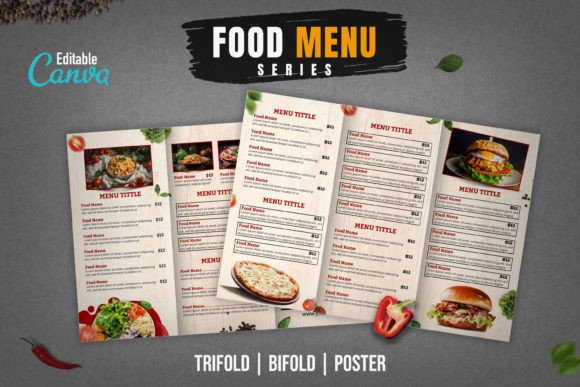
Think of your menu as a roadmap. The most important items—your signature dishes, high-margin items—should be the easiest to find. Effective templates use a combination of modern typography, strategic white space, and subtle graphic elements to create a natural reading flow. For instance, a trifold menu naturally creates three distinct panels. A skilled template will use the front cover for branding, the inner left for appetizers, the center for main courses, and the inner right for desserts and beverages, creating an intuitive journey for the customer. The typeface choices are critical here; a clear sans serif font for body text ensures readability, while a distinctive display font for section headers adds personality without sacrificing clarity.
Personality Through Style
The visual style of your menu is a direct reflection of your restaurant's brand identity. A rustic farm-to-table eatery benefits from templates with warm, earthy tones, textured backgrounds, and perhaps a handwritten font for specials. In contrast, a modern sushi bar might use a minimalist bifold menu with clean lines, ample negative space, and a sleek sans serif font to convey precision and freshness. Our collection acknowledges this diversity, offering themes from classic elegance to bold, contemporary designs. This variety allows you to select a foundation that already speaks your brand's language, saving you the foundational work of establishing a visual tone from scratch.
Strategic Applications Beyond the Table
While the primary function is clear, the utility of high-quality restaurant menu Canva templates extends far beyond the printed sheet placed on a table. They are versatile design assets that can unify your brand's visual communication across multiple platforms.
Digital and Print Consistency
In today's market, your menu lives in multiple places: on your website, in Instagram stories, as a downloadable PDF for catering inquiries, and physically in-house. Using a single template as your master source ensures absolute consistency. The same font pairing and color palette you use for your print poster menu can be adapted for a digital version, reinforcing brand recognition. This consistency is a cornerstone of professionalism. It tells your customers, whether they're scrolling online or sitting in your dining room, that you pay attention to detail—a quality they'll associate with your food and service.
Marketing and Social Media Graphics
A well-designed menu is a content goldmine. The sections of a beautifully laid-out template can be easily cropped and repurposed as social media graphics. A stunning image of your featured dish, paired with the elegant typography from your menu, becomes a compelling Instagram post. You can create "menu highlights" for Stories or design promotional flyers for a seasonal tasting event using the same visual framework. This approach saves immense time and maintains a cohesive aesthetic across all your marketing materials, from packaging design for takeout boxes to web design elements on your homepage.
Practical Guidance for Selection and Customization
Choosing and implementing a template is a strategic process. Here’s how to approach it with a designer's mindset to ensure the final product is truly your own.
Evaluating Fit and Readability
Before you even open Canva, analyze the template's structure. Does the layout accommodate your number of menu items without feeling cramped? Is there ample space for dish descriptions and pricing? Pay close attention to the font pairings included. A script or handwritten font might look beautiful for a title, but it's often illegible for paragraph text. Test the body font at a small size—will it be easy to read in dim restaurant lighting? The best templates provide a clear hierarchy: a strong display font for impact, a readable serif or sans serif font for details, and perhaps an accent font for special callouts.
The Editing Process in Canva
The power of these templates lies in their editability. Once you've selected a design, the customization process should feel intuitive. You can change the color palette to match your brand's hex codes, swap out placeholder images with your own high-quality food photography, and adjust the text to reflect your exact offerings. Don't be afraid to experiment. Move elements slightly, adjust line spacing for better readability, or change an icon. This is where you inject your unique voice. A good template provides a strong, professional starting point, but the final touches—your specific wording, your photos, your brand's exact color shade—transform it from a generic template into a true extension of your brand identity.
Licensing and Commercial Use
This is a non-negotiable step for any professional project. Always verify the licensing terms of any template or premium font you use. Reputable sources will clearly state that their assets are licensed for commercial use, allowing you to use the final menu in your business without legal concerns. This is particularly important for creative fonts included in the package. Ensure you have the right to use them in a commercial context, whether for print, digital, or as part of your logo. This due diligence protects your business and ensures your beautiful menu is also legally sound.
Ultimately, a restaurant menu is a silent salesperson, a brand ambassador, and a piece of functional art. Investing in a thoughtfully designed template provides you with a professional framework that elevates your brand, streamlines your marketing, and creates a more engaging experience for your customers. It’s about working smarter, using accessible tools to achieve a result that looks and feels custom-designed.