Capture Every Chapter: Book Review Templates for Readers
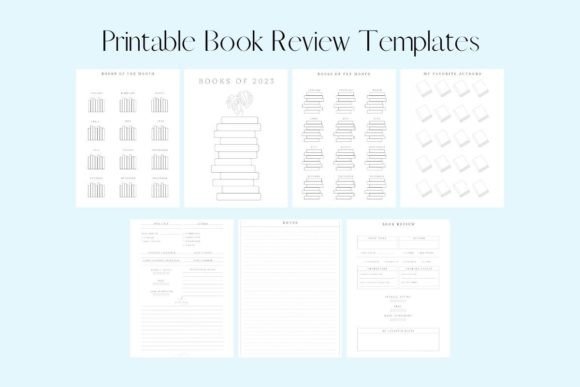
There’s a unique satisfaction in finishing a book—the final page turned, the last word absorbed. But that feeling can quickly fade, leaving you with a vague impression rather than a lasting record of your thoughts. For designers, marketers, and content creators, who often juggle multiple projects and sources of inspiration, capturing these insights systematically is not just a hobby; it’s a form of intellectual asset management. This is where a structured approach to reviewing becomes invaluable. The Book Review | Book Tracker | Templates collection is designed to transform that fleeting post-read moment into a tangible, organized archive of your reading life.
A Toolkit for the Thoughtful Reader
Forget generic, one-size-fits-all forms. This collection of printable templates is built with the same care you’d apply to a brand style guide or a client’s editorial calendar. Each template functions as a dedicated design asset, offering a clean, intuitive layout that guides you without constraining you. The visual personality is one of understated professionalism—think clean lines, ample white space, and a logical structure that prioritizes clarity. This isn’t about decorative flourish; it’s about modern typography principles applied to functional tools. The style is adaptable, making it suitable for tracking everything from business bestsellers and industry reports to fiction and personal development books.
The true strength lies in its practicality. As a brand strategist or entrepreneur, you read to gather intelligence, spot trends, and fuel ideas. These templates provide the framework to do that efficiently. They prompt you to move beyond “I liked it” to articulate why a book resonated, how its arguments are structured, and what actionable insights you can extract. This structured reflection is a cornerstone of content creation and strategic thinking, turning passive consumption into active engagement.
Integrating Reviews into Your Creative and Professional Workflow
Where do these templates find their home? The applications extend far beyond a personal journal. For a publisher or editorial designer, they can serve as a standardized internal tool for manuscript evaluation or market analysis. A marketer might use them to deconstruct competitor publications or analyze the narrative techniques of successful thought leadership books. Bloggers and content creators can use the completed forms as the foundational notes for a detailed review post, ensuring consistency and depth in their output.
Consider the packaging design professional researching historical art movements. A template can help catalog key visual references, color palettes, and typographic trends from art books. For a small business owner in the craft sector, tracking the business advice from different guides helps compare methodologies side-by-side. The templates also excel in collaborative environments, like a book club run by a team of creatives, where standardized notes facilitate more productive and focused discussions. They are, in essence, a creative font of knowledge organization, providing the structure to make your reading data work harder for you.
Designing Your Personal Library of Insights
Choosing to use a Book Review | Book Tracker | Templates system is about investing in your own intellectual clarity. The act of filling out a form—recording the core thesis, standout quotes, and personal reactions—cements the information in your memory. It creates a searchable, personal database. Months later, you won’t just remember that you read a book on leadership; you’ll have your own annotated summary of its key frameworks, ready to inform a project or spark a new idea.
This practice also hones your critical eye, a skill directly transferable to evaluating logo design, web design layouts, or social media graphics. You learn to articulate why something works, moving from subjective taste to objective analysis. The templates encourage a consistent font pairing of thought and record, building a recognizable pattern in how you process information. This consistency is the bedrock of a strong personal brand identity, whether you’re building a reputation as a thought leader, a meticulous researcher, or a discerning curator.
Ultimately, these templates are more than just paper. They are a commitment to mindful consumption in an age of information overload. They are premium font for your thoughts, giving them weight and form. By adopting this system, you’re not just tracking books; you’re building a legacy of learning, one structured review at a time, ensuring that the value of every page you turn is captured and ready for future application.